
Simon Peter replied, “You are the Christ, the Son of the living God.” And Jesus answered him, “Blessed are you, Simon son of Jonah! For flesh and blood has not revealed this to you, but my Father who is in heaven. And I tell you, you are Peter, and on this rock I will build my church, and the gates of hell shall not prevail against it. (Matthew 16:16-18)
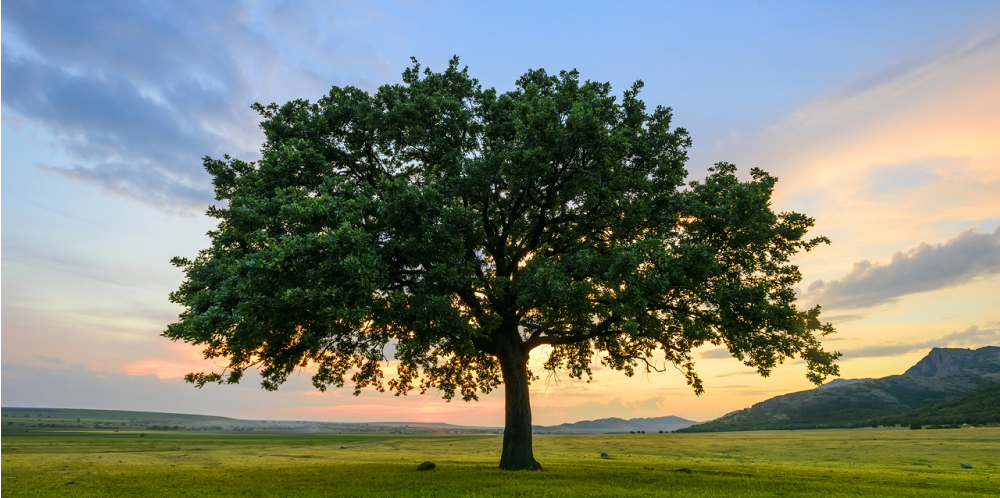
Recently I received a short article dealing with the state of the Catholic Church. The author begins by comparing the two trees in the parable found in Luke 6:43-45. I found his conclusions inescapable.
The True Catholic Church produces only the fruit of Catholic Doctrine which is only of Faith – the Dogmas of Faith, the defined Articles of Faith, properly explained, elaborated, and explicated. The bad tree, however, produces wicked fruit of a different kind — heresy — because it is a different species of tree. — By Their Fruits Ye Shall Know Them (Fr Paul Kramer )
Fr. Kramer is correct, I am sadly forced to admit. It seems to me that the bad tree and the good tree are presented to us in such a way that one has to exert oneself to distinguish one from the other.
Jesus shows us real good fruit. The devil shows us only a false appearance
Jesus proposes to look at the fruit as a method to distinguish one tree from the other. A long time has passed since the days when our mother Eve found the fruit of the forbidden tree as something desirable to eat.
So when the woman saw that the tree was good for food, and that it was a delight to the eyes, and that the tree was to be desired to make one wise, she took of its fruit and ate, and she also gave some to her husband who was with her, and he ate. (Genesis 3:6)
Eating the fruit of the wrong tree was the way sin entered the world. It entered through one of the favorite snares of the devil: the appetizing image that awakens human desire first and then corrupts the soul by turning casual desire into a form of avarice or envy that ends up rotting and eventually killing the envious. Avarice and envy are killers by nature, the wicked sisters of human desire.
The act of eating appears all over Holy Scripture sometimes shown clearly (i.e. the Holy Eucharist) and sometimes concealed. One such occasion is found in the Gospel According to Luke:
He entered Jericho and was passing through it. A man was there named Zacchaeus; he was a chief tax-collector and was rich. He was trying to see who Jesus was, but on account of the crowd he could not, because he was short in stature. So he ran ahead and climbed a sycamore tree to see him, because he was going to pass that way. When Jesus came to the place, he looked up and said to him, ‘Zacchaeus, hurry and come down; for I must stay at your house today.’ So he hurried down and was happy to welcome him. All who saw it began to grumble and said, ‘He has gone to be the guest of one who is a sinner.’ Zacchaeus stood there and said to the Lord, ‘Look, half of my possessions, Lord, I will give to the poor; and if I have defrauded anyone of anything, I will pay back four times as much.’ Then Jesus said to him, ‘Today salvation has come to this house, because he too is a son of Abraham. For the Son of Man came to seek out and to save the lost.’ (Luke 19:1-10)
Jesus arranged the encounter with Zacchaeus to teach us about His desire, which is holy. The sinner is found on the branches of a tree and Jesus calls the sinner to Himself. A transformation occurs and the rotten fruit is made whole, becoming good fruit. The fruit in this case is repentance. That was the fruit that Jesus desired when he began His ministry preaching “Repent and believe in the Good News!”
But Jesus also teaches us about bad fruit.
On the following day, when they came from Bethany, he was hungry. Seeing in the distance a fig tree in leaf, he went to see whether perhaps he would find anything on it. When he came to it, he found nothing but leaves, for it was not the season for figs. He said to it, ‘May no one ever eat fruit from you again.’ And his disciples heard it. (Mark 11:12-14)
The fig tree was —like so many who practice the faith in vain— only apparently fruitful. Nice leaves sprouting early in the season. If it is bad being tempted by bad fruit, I think it is worse to be tempted by no fruit at all. Jesus curses the fruitless tree and it eventually withered. Reading carefully and considering the location close to the Temple, one can see that Christ was using the vain fig tree as a model of the religious system of that time. That system withered and burned in 70 A.D. when the Romans burned the Temple and the two millennia exile of Israel began.
Some could argue that “it was not the season for figs” and that brings to my mind some opposite image found in Revelation 21. The trees described there are perhaps representing the Twelve Apostles yielding the fruit of good doctrine, watered by the River of Life that comes from the Throne of God. They give good fruit and even their leaves serve for the “healing of the nations” —important note: nothing there is found deserving of a curse. The image is a counterpoint of that other image we considered in the paragraph above.
Then the angel showed me the river of the water of life, bright as crystal, flowing from the throne of God and of the Lamb through the middle of the street of the city; also, on either side of the river, the tree of life with its twelve kinds of fruit, yielding its fruit each month. The leaves of the tree were for the healing of the nations. No longer will there be anything accursed, but the throne of God and of the Lamb will be in it, and his servants will worship him. (Revelation 21:1-3)
Facets of a diamond. Jesus teaches a deep mystery
To teach his disciples the realities that their descendants were going to contemplate 2,000 years later is a challenge. Let us be thankful that Our Lord is the best Teacher in the entire universe! He devised a way to conceal and at the same time reveal the great mystery. So many have tried to unravel the mystery of the two women, the one shown in Revelation 12 and the other found in Revelation 17. Both women appear to depict two churches: one virtuous and triumphant (c. 12) and the other corrupt and accursed. (c. 17)
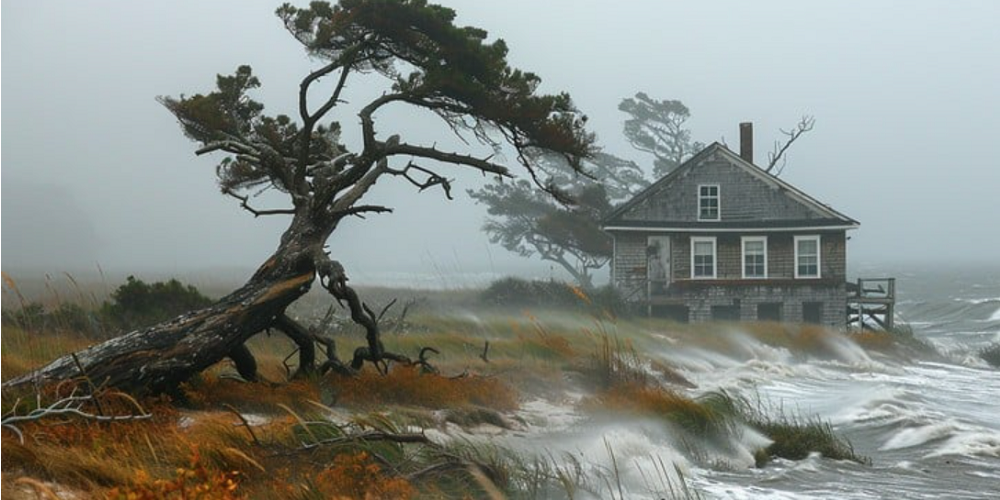
“Why do you call me ‘Lord, Lord,’ and not do what I tell you? Everyone who comes to me and hears my words and does them, I will show you what he is like: he is like a man building a house, who dug deep and laid the foundation on the rock. And when a flood arose, the stream broke against that house and could not shake it, because it had been well built. But the one who hears and does not do them is like a man who built a house on the ground without a foundation. When the stream broke against it, immediately it fell, and great was the ruin of that house.” (Luke 6:46-49)
Remember that Peter is compared to a rock in Matthew 16:16-18? Jesus makes a point of calling him Kepha (Petros, or Rock) because Jesus is building His Church upon that man. From the human point of view one could think that Peter was a terrible choice! He was not the smartest of the group, he was older, rather impulsive, often could not understand his Teacher, etc. What is Jesus trying to explain there? I think Jesus chose Peter precisely because the fisherman was the most inadequate for the job. The glory of building a Church, a New Israel from a motley crew led by a man well known for his many imperfections … will go to Whom it belongs, to Christ Himself! Because Christ is the Rock that will provide the necessary firmness for the house to be built upon. The doctrine of Christ will anchor and define the Church. False imitations will have a hard time coming up with something better than that. That eternal doctrine is given to the Twelve and among them the keys are given to Peter not because he is the best but because he is not. In that way the Church will survive forever in grace. That is not the grace of Peter but the grace of God. Our beloved, imperfect, grumpy, cowardly Peter is there to prove that there is a Force behind him that is divine, not human. That is the way we have to understand God’s mercy. NOT as permission to tolerate sin but as a bulwark against it.
“Why do you call me ‘Lord, Lord,’ and not do what I tell you?”
Jesus begins the parable of the two houses with those words to reveal the importance of the obedience to His doctrine. The perishing house is the house that lacks the right foundation. That foundation is the same mentioned in Isaiah 28:16.
therefore thus says the Lord God, see, I am laying in Zion a foundation stone, a tested stone, a precious cornerstone, a sure foundation: “One who trusts will not panic.”
That cornerstone is Christ, that sure foundation is the One that laid the foundations of the world according to Job 38:4-7.
“Where were you when I laid the earth’s foundation?
Tell me, if you understand.
Who marked off its dimensions? Surely you know!
Who stretched a measuring line across it?
On what were its footings set,
or who laid its cornerstone—
while the morning stars sang together
and all the angels shouted for joy?”
In the same article quoted previously I extract this paragraph. I am sorry if this offends anyone. I am willing to hear arguments to the contrary but so far, nothing substantial has reached me.
Our Lord Jesus Christ said: “Heaven and earth shall pass away but My words shall not pass.” (Matthew 24:35) — that is, the Articles of Faith, the truths of Divine Revelation, of the Eternal Word of the Father that He spoke — being Himself, the Incarnate Eternal Word of the Father, which will never pass away. The Dogma of Faith will always be preserved unto the end of the world. Our Lord Jesus Christ said: “…the Son of man, when He cometh, shall He find, think you, Faith on earth?” (Luke 18:8) He will find the true Faith, but only among the elect. Those who do not have that Faith will be going to eternal perdition, which is to say, to the fires of Hell for all eternity. This is the Dogma of Faith. THERE IS NO OTHER. — By Their Fruits Ye Shall Know Them (Fr Paul Kramer)
Concluding this already long post, Fr. Leonardo Castellani gave us a very good prophetic overview of our own age.
“Assisted by the Holy Ghost, the Church obstructs its manifestation and reduces it, grounded on the human order that the Roman Empire organized in one political and legal body; but a day will come when we’ll arrive to the end of that age, and when that happens, the Obstacle shall be removed. Perhaps the Holy Ghost will then abandon that historical social body, called Christendom, carrying with it the elected to the most absolute solitude, giving it two wings of a great eagle that they might fly into the wilderness. And then the Church’s temporal structure will be Antichrist’s prey, and will fornicate with the kings of the earth, or at least with most of them, as has happened before, and the abomination of desolation shall stand in the holy place.” Cristo vuelve o no vuelve? by Fr Leonardo Castellani.
This post does not even begin to exhaust this theme but to conclude: the Catholic doctrine of the ages, even from the times of the Apostles, teaches that a false church will emerge to mislead mankind and will even try to mislead the elect. I was referred to an article that I link here for your discernment: The Complete Version of the 1878 Secret of La Salette.

The Lord loves those who hate evil; he guards the lives of his faithful; he rescues them from the hand of the wicked. Light dawns for the righteous, and joy for the upright in heart. (Psalm 97)
 Quod scripsi, scripsi
ANONIMOUS VIA EMAIL
On August 1, 1976 in Philadelphia, [soon-to-become] Pope John Paul II said, “We are now standing in the face of the greatest historical confrontation humanity has ever experienced. I do not think that the wide circle of the American Society, or the whole wide circle of the Christian Community realize this fully. We are now facing the final confrontation between the Church and the anti-church, between the gospel and the anti-gospel, between Christ and the antichrist. The confrontation lies within the plans of Divine Providence. It is, therefore, in God’s Plan, and it must be a trial which the Church must take up, and face courageously.”
.
And he was still elected Pope anyway (in 1978 ).
.
Quote
After he was elected pope, John Paul II briefly reiterated this point in 1981, mentioning also that it pertains to the message of Fatima. Bergoglio has declared his intention to reform the Church (and is initiating those reforms) in such a manner that would transform the Church into the anti-church foretold in the secret of Fatima and by Pope Leo XIII.
LikeLike