
Jorge Martínez Barrera
“A great portion of society professes the quirkiest ideas.”
I don’t think I’m exaggerating when I assume that around a quarter of every society, any society at all, is made up of fairly unhinged people. This figure isn’t arbitrary: I take it from that invincible militancy of approximately 25% that tends to enthusiastically support certain political parties, social movements, or brotherhoods dedicated to causes that defy all logic, without anyone ever quite understanding why, and without their adherents showing any particular interest in explaining it.
I’m talking about incorrigible lunatics and the irredeemably delusional, willing to defend ideas such as that God is either unjust or not all-powerful (a thesis held by none other than Max Weber), or beliefs whose concrete application has resulted, time and again, in the impoverishment of communities, the brutalization of their members, and the loss of things considered valuable for centuries.
Roger Scruton, the English philosopher who died five years ago, offers an unmissable inventory of some of these absurdities in his book, Madmen, Impostors, and Agitators: Thinkers of the New Left.
Scruton cites, among others, Alain Badiou, the French thinker who was the subject of countless doctoral theses and an author venerated by the gauche divine entrenched in many universities. In a 1977 essay, Badiou asserts that “there is only one great philosopher of our time, and his name is Mao Zedong.”
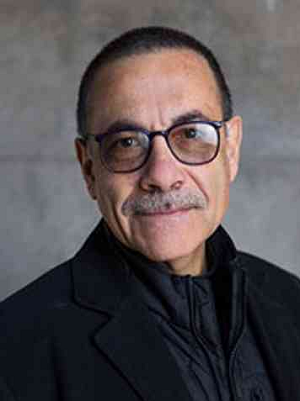
The author is Doctor of Philosophy and Academic at the Gabriela Mistral University (Santiago, Chile).
Zlavoj Žižek, the enfant terrible of neo-Marxists and also cited by Scruton, goes so far as to suggest in his book In Defense of Lost Causes that the real problem with Hitler or Stalin is that they weren’t violent enough. It’s time, he says, to reinvent terror. Instead of vilifying Stalin, we should rather praise him for his humanity, the Slovenian thinker asserts, since he rescued the Soviet experiment in biopolitics.
It’s possible that this deranged quarter of human beings is convinced that the most outlandish ideas —ones a six-year-old would find absurd— actually contain profound truths. And, to our surprise, these extravagant people seem to be having more success than they ever dreamed.
In fact, cancel culture has become a kind of fallout shelter where it is not only possible to resist reason, sanity, and moderation, but also, from there, to continue stoning, with total impunity, the bewildered defenders of common sense.
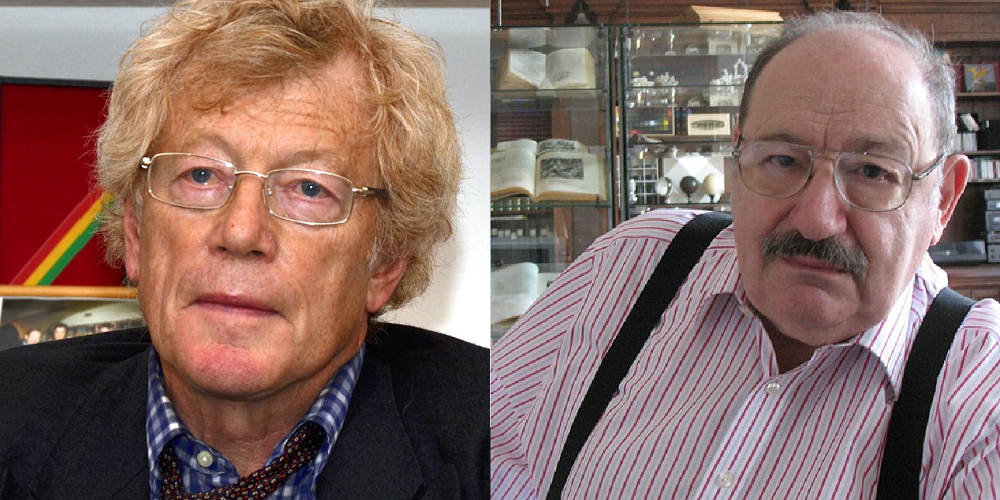
Umberto Eco already warned of this in 2015, upon receiving an Honorary Doctorate in Communication from the University of Turin:
“Social media gives the right to speak to legions of nitwits who previously only spoke at the bar after sipping a glass of wine, without harming the community. They were quickly silenced, and now they have the same right to speak as a Nobel Prize winner. It’s the invasion of the idiots.”
Perhaps one of the most urgent challenges of sensible politics—if there still is one—is to prevent this vociferous minority of apologists for nonsense from metastasizing into a majority that, simply by shouting less, risks appearing nonexistent. It wouldn’t be a bad idea to lead by example either.
Previously published in Spanish by La Prensa, Buenos Aires

 Quod scripsi, scripsi