— Proverbs 25:2
Those who feel infallible speak with much force. The Church is not lacking self-appointed infallible leaders these days. (cf. Matthew 23:2) There are those who make saints out of someone who has barely assumed room temperature. Others scan ancient documents trying to find an argument to depose a pope or impede the ascension of other. Confusion in Rome is making the barbarians stronger.
Considering the many controversies, there are many good people that look at the Catholic Church from a distance, perhaps from a “periphery” that has nothing to do with deviant sexual practices or fringe political creeds. Those simply would like to worship God as God has always asked to be worshiped. The devil (always ready to impede and confound) has managed to place evil agents between those good men and women and the altar of God. To use St. Paul’s figure of speech: many grope in the dark night trying to find God and the present turmoil is not helping them in their honest search.
The God who made the world and everything in it, He who is Lord of heaven and earth, does not live in shrines made by human hands, nor is He served by human hands, as though He needed anything, since He Himself gives to all mortals life and breath and all things. From one ancestor He made all nations to inhabit the whole earth, and He allotted the times of their existence and the boundaries of the places where they would live, so that they would search for God and perhaps grope for Him and find Him—though indeed He is not far from each one of us.— Acts 17:24-27 part of St. Paul’s address to the pagans at the Areopagus of Athens
The last two posts in Quod Scripsi, Scripsi elicited scorn from some, rude reactions from others. Not one argument, just rejection with the force of self-perceived infallibility. That is a good indication that I was not too far off the mark. So I will try to explain it again. In my opinion these are not predictions that may or may not come to pass. The scary part is that they came to pass and there is no way to deny it if one simply looks at them closely. So here we go for the third time!
In my view our present situation is defined by three elements intertwined into one: Malachi + Garabandal + Guadalupe.
St. Malachi (or the “forger” that so many sincerely insist on finding) was especially clear on describing the last six popes of his prophecy: Pacelli, Roncalli, Montini, Luciani, Wojtila, Ratzinger. There is one video that greatly helped me to learn the arguments in favor of the forgery. I tend to agree with those arguments but at the same time I find them lacking in force. The video I am referring to is titled: Did St Malachi prophecy that Pope Francis would be the last pope? by Fr. Thady of the YouTube channel God’s Cottage. The video is about 15 minutes long but very informative.
Fr. Thady argues convincingly in favor of the forgery position:
(a) The mottoes in the prophecy are quite precise for all the popes before 1590 but not so precise for popes after that year. The alleged prophecy was known by 1587 and was published in 1595 for the first time.
(b) There are some apparent anachronisms that seem to indicate a forgery
(c) Some see in it a frustrated intent to promote the candidacy of a certain Cardinal. That was apparently the reason to forge a list of pontiffs attributing it to St. Malachi, a bishop who was summoned to Rome in 1139.
Our always ubiquitous Wikipedia offers a brief explanation of the main arguments in favor of the forgery option in their article Prophecy of the Popes:
“Several historians have concluded that the prophecy is a late 16th‑century forgery. Saint Bernard of Clairvaux, a contemporary biographer of Malachy who recorded the saint’s alleged miracles, makes no mention of the prophecy. The earliest known reference to them dates to 1587. Spanish monk and scholar Benito Jerónimo Feijóo y Montenegro wrote in his Teatro Crítico Universal (1724–1739), in an entry called Purported prophecies, that the high level of accuracy of the verses up until the date they were published, compared with their high level of inaccuracy after that date, is evidence that they were created around the time of publication. The verses and explanations given by Wion correspond very closely to a 1557 history of the popes by Onofrio Panvinio (including replication of errors made by Panvinio), which may indicate that the prophecy was written based on that source. In 1694, Claude-François Menestrier argued the additional interpretive statements were not written by Ciacconius, as the prophecy was not mentioned in any of Ciacconius’ works, nor were the interpretive statements listed among his works.
One theory to explain the prophecy’s creation, put forward by 17th-century French priest and encyclopedist Louis Moréri, among others, is that it was spread by supporters of Cardinal Girolamo Simoncelli in support of his bid to become pope during the 1590 conclave to replace Urban VII. In the prophecy, the pope following Urban VII is given the description “Ex antiquitate Urbis” (“from the old city”), and Simoncelli was from Orvieto, which in Latin is Urbevetanum, “old city”. Moréri and others proposed the prophecy was created in an unsuccessful attempt to demonstrate that Simoncelli was destined to be pope. However, the discovery of a reference to the prophecy in a 1587 letter has cast doubt on this theory. In this document the entourage of Cardinal Giovanni Girolamo Albani interprets the motto De rore coeli (“From the dew of the sky”) as a reference to their master, on the base of the link between alba (“dawn”) and Albani, and the dew, as a typical morning atmospheric phenomenon.”
Fr. Thady’s presentation is similar to that in Wikipedia. All I can say is that having agreed to the general idea of a forgery, I need to point out at a few things. These few details may not be sufficient to debunk the theory of forgery but are nevertheless quite surprisingly accurate.
Mottoes that raise eyebrows
NOTE: In the list below, the names of the various Popes are linked to a Wikipedia biographical file for that pontiff.
Motto#104: Religio depopulata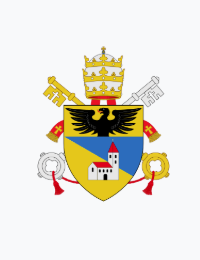
This is wrongly translated “religion destroyed” when a more accurate rendition would be “religion devastated”. The motto identifies Pope Benedict XV who reigned from 1914 to 1922 during the Great War of 1914-1919 and the terrible Influenza epidemic that affected almost the whole world. Pope Benedict XV followed Pope Pius X who had issued the encyclical Pascendi Domini Gregis (1907) and the decree Lamentabili Sane Exitu. Those documents followed the Syllabus of Errors by a previous Pontiff, Pius IX all of them address the errors of Modernism, responsible for the loss of unnumbered souls. The combination of war, the worldwide influenza epidemic and Modernism with other maladies such as Liberalism, Socialism, Marxism, Fascism, and Anarchism literally depopulated Christendom in manifold ways.
The motto is quite descriptive of those years comprised by the reign of Benedict XV. It is interesting to note that Pope Benedict XV was called Giacomo Giovanni Battista della Chiesa, a name that can be translated “Jacob John Baptist of the Church.” The biblical implications of that name hardly need an explanation: Jacob or Israel, the Patriarch and father of the tribes of Israel; John the Baptist, the precursor of Christ; and finally “of the Church” a surname linking all the previous symbolic names to the Church this saintly man was destined to preside. Many decades later, Joseph Aloysius Ratzinger was going to take the name of Benedict XVI honoring his predecessor Della Chiesa. The pontificates of these two Benedicts aptly bring to mind two bookends that open and close a period of great upheavals for the Papacy and the world.
Motto#105: Fides Intrepida
Intrepid Faith! Certainly the zeal of Pius XI who reigned during the ascent of Nazism in Europe (1922–1939) is out of discussion. His encyclicals Mit brennender Sorge (1937) , Divini Redemptoris are still a courageous witness of faith. They were given at a time when Hitler and his ideas appeared to be ready to take over the whole of Europe and even the whole world. The motto is very clearly right in this case. Let us remember that this motto was applied more than 350 years before. Whoever forged this part of the prophecy seemed to suddenly have an accuracy surge that continues with all the pontiffs until Benedict XVI who is —at the time pf Pius XI— still seven decades in the future.
Motto#106: Pastor Angelicus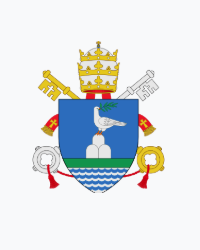
Angelic Shepherd. Pius XII. Pope Pacelli was certainly a saintly man. His intervention saved many Jews at risk of being exterminated by the brutal Nazi regime. Like many saints throughout history, his courageous work was paid with scorn and false accusations. Please see It’s the Season to Accuse for more details and to confirm how this Angelic Shepherd steered the barque of Peter in the difficult years during and following World War II.
Motto#107: Pastor et Nauta 
John XXIII, Pope Roncalli can be easily identified by this motto because of his pastoral character and work and also because he was the Patriarch of Venice at the time of his election to the papacy. Venice, the ancient city of mariners (nauta means “mariner, sailor”) the homeland of Marco Polo, was (at the time this prophecy was allegedly written) the largest and most important maritime city in the world thanks to an extensive network of ports and commercial lines that earned her the title of the Most Serene power, La Serenissima.
Motto#108: Flos Florum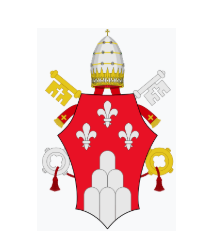
Pope Paul VI, Flower of Flowers had three fleur the lys in his coat of arms. He was Archbishop of Milan at the time of his election. Milan is also known for its gardens and parks (Montanelli, Orto di Brera, Parco Sempione, etc.)
Motto#109: De Medietate Lunæ
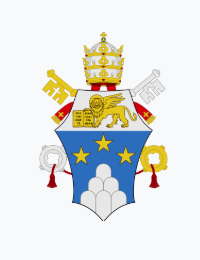
John Paul I, the Pope of “the half-moon” was Albino Luciani. He combined the names of his two predecessors (John XXIII and Paul VI) for his pontifical name. Here the prophecy is amazingly rich in connections. Pope Luciani’s name can be translated as “white luminary.” He was born, found his vocation, ordination, and early ministry in the Diocese of Belluno, a name that means “beautiful moon” in the local dialect. He reigned for 33 days in 1978 and was known as “the September Pope”. His papacy started on the half moon of August (26) lasting 33 days until his death in the waning gibbous of September, 28.
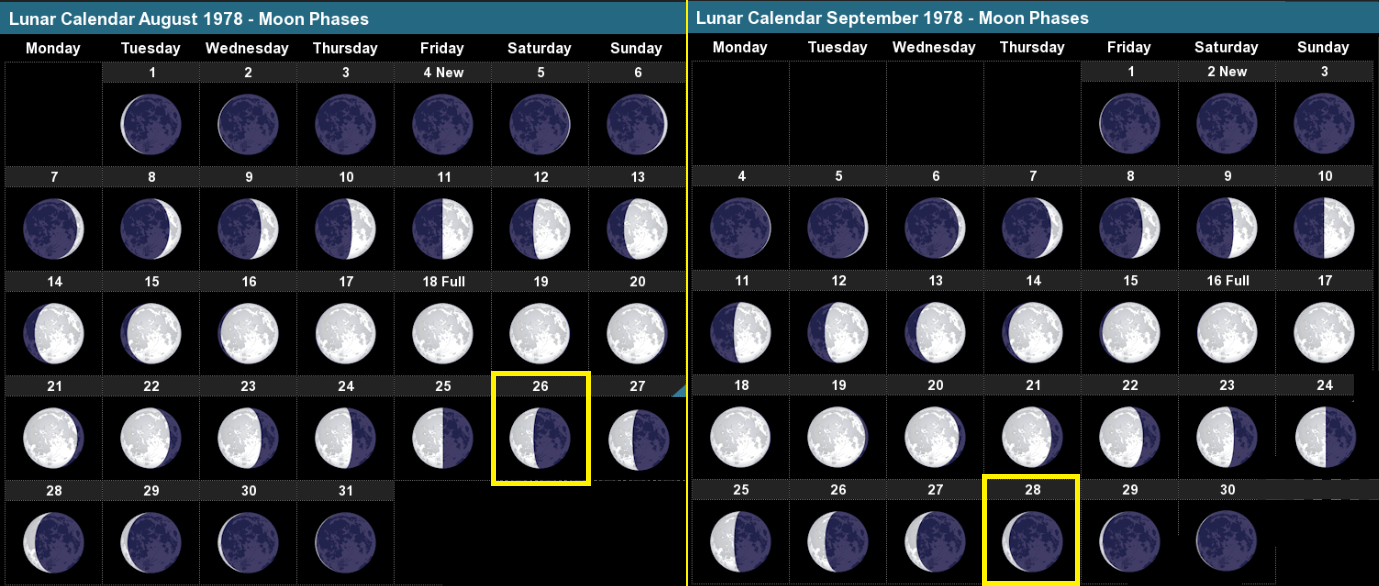
I find this “coincidences” quite intriguing! To this day, the many detractors of the Prophecy of the Popes have not satisfactorily explained this part. The details we are analyzing in this post were already part of the Prophecy of the Popes when it was first published in 1595 by Arnold Wion.
There seems to be an apparent return to accuracy at least beginning with the motto corresponding to Benedict XV (pp. 1914-1922) and continuing until the reference to Benedict XVI. Of all the mottoes presented to us between those two pontiffs, one has to admit the most striking is De Medietate Lunae. Was the person who “forged” the list inspired? Could that possibly been predicted 391 years prior to the reign of Pope John Paul I? Is this just chance?
He was called “Holy Father” by sister Lucia dos Santos during a visit to Fatima many years before anyone even thought of him becoming a successor of St. Peter.
Motto#110: De Labore Solis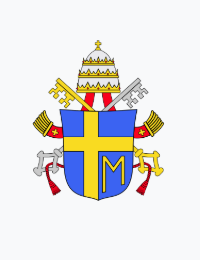
Karol Józef Wojtila, John Paul II. The occurrence of solar eclipses on the day John Paul II was born (18 May, 1920) and on the day of his death (8 April, 2005) appear to support the motto of “the labors of the Sun” but the solar character of the pontiff is even more suggestive. His active participation on the demise of Soviet communism in Poland, then on the Soviet Union and Eastern Europe in general coincides with his emblem. His influence seemed to move East to West in the history our world. The reign of John Paull II lasted almost three decades, a time that changed the life of millions. God certainly used Pope Wojtila to bring the people of the East out of the shadows of Soviet domination. In that sense, the figure of John Paul II aptly represented the sun ascending in the sky announcing the advent of Our Lord’s glorious day and the upcoming Age of Mary. (cf. John 9:4-5)
His ascension to the papacy —after the “moon pope” John Paul I— is also suggestive of the fourth day of Creation. (cf. Genesis 1:14-19)
“God made the two great lights—the greater light to rule the day and the lesser light to rule the night—and the stars. God set them in the dome of the sky to give light upon the earth, to rule over the day and over the night, and to separate the light from the darkness. (Genesis 1:16-18)
Motto#111: De Gloria Olivae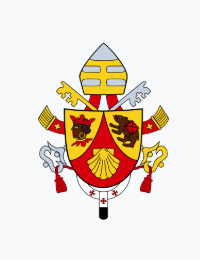
Joseph Aloysius Ratzinger, Benedict XVI. Consider the words of St. Paul in Romans 11:13-24 preaching to the Gentiles about the final conversion of natural Israel.
“Now I am speaking to you Gentiles. Inasmuch then as I am an apostle to the Gentiles, I glorify my ministry in order to make my own people jealous, and thus save some of them. For if their rejection is the reconciliation of the world, what will their acceptance be but life from the dead! If the part of the dough offered as first fruits is holy, then the whole batch is holy; and if the root is holy, then the branches also are holy. But if some of the branches were broken off, and you, a wild olive shoot, were grafted in their place to share the rich root of the olive tree, do not vaunt yourselves over the branches. If you do vaunt yourselves, remember that it is not you that support the root, but the root that supports you. You will say, ‘Branches were broken off so that I might be grafted in.’ That is true. They were broken off because of their unbelief, but you stand only through faith. So do not become proud, but stand in awe. For if God did not spare the natural branches, perhaps he will not spare you. Note then the kindness and the severity of God: severity towards those who have fallen, but God’s kindness towards you, provided you continue in his kindness; otherwise you also will be cut off. And even those of Israel, if they do not persist in unbelief, will be grafted in, for God has the power to graft them in again. For if you have been cut from what is by nature a wild olive tree and grafted, contrary to nature, into a cultivated olive tree, how much more will these natural branches be grafted back into their own olive tree.” (Romans 11:13-24)
Pope Benedict’s chose to be called after St. Benedict of Nursia, founder of the Benedictines “of which the Olivetans are one branch” — St. Benedict successfully worked and prayed for Europe to survive the fall of the Roman Empire. Like the olive tree can resurge whole from a single cut-off branch, perhaps the cut-off papacy of our beloved papa Ratzinger will resurge and impulse the revival of St. Peter’s rule over his faithful Roman subjects.
Benedict XVI seems to be the closing bookend of an age. The olive branch announces an impending revival like the revival of Europe as a new Rome, Christendom brought about by the labors of St. Benedict. Meditate on this reading from Genesis:
He [Noah] waited another seven days, and again he sent out the dove from the ark; and the dove came back to him in the evening, and there in its beak was a freshly plucked olive leaf; so Noah knew that the waters had subsided from the earth. (Genesis 8: 10-11; cf. also Genesis 8:612)
The interruption of the list and Petrus Romanus
The main list of the Prophecy of the Popes ends with De Gloria Olivae. Then there is a hiatus followed by a mysterious phrase and the appearance of a no less mysterious person, Petrus Romanus, Peter the Roman.
In persecutione extrema S. R. E. sedebit Petrus Romanus, qui pascet oves in multis tribulationibus: quibus transactis civitas septicollis diruetur et judex tremendus judicabit populum. Finis.
I translate that phrase this way, although my Latin is at best rudimentary:
In the final persecution, the seat of the Holy Roman Church will be occupied by Peter the Roman, who will feed his sheep through many tribulations; when that is concluded (quibus transactis), the city of seven hills will be devastated, and the fearsome judge will judge his people. The End.
In my view that hiatus is not just casually there but seems to represent what follows the end of the first age of the Papacy concluded with the reign of Benedict XVI. One may ask: “What about Francis?” and I must refer you to the many scholars that have indicated to us the problems with the controversial abdication of the papal ministry by Benedict XVI. Was Francis was an usurper of the throne of Peter, the man that sat “where it ought not” representing an aggressive apostate group that executed a Vatican coup d’état so that the ancient prophecies may be fulfilled?
I am posing what I think is a very valid question. The state of the Catholic Church at this time (in my humble and most ignorant opinion) is similar to the state of the people of Israel during the days of Jesus. Our Lord Himself left us his view of the situation at that time, as the end of the Mosaic Order was approaching and the Age of the Church was looming in the horizon of history:
When he saw the crowds, he had compassion for them, because they were harassed and helpless, like sheep without a shepherd. Then he said to his disciples, ‘The harvest is plentiful, but the laborers are few; therefore ask the Lord of the harvest to send out laborers into his harvest. (Matthew 9:37-38)
The laborers are few indeed. Who will be found feeding the sheep when the Lord comes? Certainly not those who preach the modernistic, empty gospel we so often hear from so many pulpits! These days, the news services of the world publish more and more anti-Christian propaganda. It is obvious that the concealed persecution of today will bring about a more violent persecution in the future: persecutione extrema. That is what Petrus Romanus must face. Is Peter the Roman the last pope? We are not told that here but it is suggestive that the list of popes ends with De Gloria Olivae. The validity of the popes following the disastrous Bergoglian era is seriously compromised. We should ask the real Catholic scholars about that. The answers yours truly is getting are quite clear. The highest altar of the Church was defiled on October 13, 2019 just before the breakout of the Covid epidemic. Doctrinal and liturgical confusion reigns among the flock that is “harassed and helpless, like sheep without a shepherd.” Am I evaluating this right? All I can say is: that is sincerely what I see.
Finis, the End Times
The Prophecy of the Popes starts with what seems to be an obvious falsification and yet, —four centuries later— we find ourselves reading a quite plausible number of emblems for the last eight popes in the series. What is happening here? you may ask. Well, I am honestly asking myself the same question.
After examining the Prophecy of the Popes and finding that it seems to point to the end of an age, it is quite intriguing to see how other recent prophetic events appear to validate and shine some light on those mysterious predictions.
Other coincidences — Garabandal
Conchita of Garabandal (Concepción Gonzalez-McKenna) has been repeating this since the day John XXIII (Roncalli) died on June 3, 1963:
“It was June 3, 1963. The news of Pope John XXIII’s death had just reached Garabandal and Conchita made her way to the church with her mother to pray for the Pontiff’s eternal repose. On their way, Conchita hears the unmistakable voice of Our Blessed Mother in her saying, “After this pope, there are only three left. Then [it will be] the end of times.” [“Después de Juan XXIII, ya sólo quedaban tres Papas, y éste es el primero de los tres.”] Soon after, the Virgin Mary specifies that even though she says that only three are left, there will be another that will “govern the Church for a very short time,” which is why She does not include him on the list. There are witnesses that affirm hearing Conchita made this clarification during that very month: June 1963. This means that, in one sentence Our Blessed Mother prophesied two things:
1. There are only three popes left. Then it will be the end of times. [1]
2. To assure us that her first affirmation is true, Our Blessed Mother provides a sign: there will actually be one more pope, but his pontificate will be so brief that he is not counted.We all know who that pope is whose pontificate was so ephemeral that it did not come to be a great influence on the Church’s destiny: John Paul I, pope from August 26, 1978 until his death on September 28, 1978. Pope Luciani’s 33 day-long pontificate corresponded perfectly to this exceptional prediction, impossible to predict in 1963. The three popes from Our Lady’s prophecy are therefore Paul VI, John Paul II and Benedict XVI. After Pope Francis’ arrival, the start of the “end of times” will have begun.” — Taken from The three popes and the end of times.
That tiny prophetic locution contains a proof in itself (“one govern the Church for a very short time”) confirmed in 1978 when Luciani (De Medietate Lunae, in the Prophecy of the Popes) reigned 33 days roughly from the half moon of August to the half moon of September of that year if I am not mistaken. His short reign was predicted fifteen years ahead … not bad when considering that out of the blue the wave of immoral priests, the disrespect of the Holy Sacrament, and the present general apostasy were predicted as well.
As my message on October 18, 1961, has not been complied with and has not been made known, I am advising you that this is the last one. Before, the cup was filling up, now it is overflowing. Many cardinals, many bishops and many priests are on the road to perdition and taking many souls with them. Less and less importance is being given to the Eucharist. You should turn the wrath of God away from yourself by your efforts. If you ask Him for forgiveness with a sincere heart, He will pardon you. I, your Mother, through the intercession of St. Michael the archangel, ask you to amend your lives. You are now receiving the last Warnings. I love you very much and do not want your condemnation. Pray to us with sincerity and we will grant your requests. You should make more sacrifices. Think about the passion of Jesus. — Miracle at Garabandal. Ch. III. Conchita recalls events by Harry Daley; Second Message of June 18, 1965.
I am not attacking anyone, I am simply stating the facts. The Prophecy of the Popes “perpetrated” in the late 1500’s? Looking at the lines referring to the last century I have found the predictions rather good for a 400 year old forgery.
Other coincidences — Guadalupe, Akita
A modest man Alessandro Massano, a teacher of astronomy, family man, unknown to the world … comes up with a hidden prophecy found in the stars of the mantle of our Lady of Guadalupe. Mysteriously painted on her mantle are 46 stars grouped in 14 constellations, 14 collections of pope names: Julius (1), John (1), Sixtus (1), Marcellus (1), Urban (2), Alexander (2), John Paul (2), Leo (3), Gregory (4), Paul (4), Benedict (4), Innocentius (5), Clement (7), Pio (9). The chances of these coinciding are (+-) 0.3^67.
“The number of stars that appear on Our Lady’s mantle on St. Juan Diego’s tilma corresponds to the number of popes after Clement VII up to Benedict XVI and the number of stars in each constellation also corresponds to the number of times a pontiff chose a particular name.”
Read the whole article with excellent references HERE.
The marker in time
These are not prophecies that “may not be fulfilled”. Garabandal and Guadalupe are already fulfilled by the simple device of them coinciding in Ratzinger. He would be a sort of a marker indicating the end of the list. The “message” or the “teaching” is: WATCH OUT WHEN YOU GET TO RATZINGER/BENEDICT XVI/THE GLORY OF THE OLIVE! We have seen it with our own eyes. In the words of one of my readers who commented recently:
“Bergoglio was an absolute torpedo amidships to the Catholic barque of Peter. At the moment of greatest social toxicity and danger, Francis pulled the Church out from under everyone’s feet.“
It was the end of an age and Francis was not “just another pope.” He was the agent who took the more or less generalized apostasy to the very top of the Church completing a long process that had started many decades before. The recently elected pope Prevost (Leo XIV) is presumably the one that will preside over the final destruction. The rebels will do to the Church what they did to Benedict XVI but the cut-off branch shall revive with much force! Let us pray for the Church, for its faithful members, for those persecuted and martyred and prepare for the approaching glorious revival of the Church, the eternal Israel in Christ.
“As I told you, if men do not repent and better themselves, the Father will inflict a terrible punishment on all humanity. It will be a punishment greater than the deluge, such as one will never have seen before. Fire will fall from the sky and will wipe out a great part of humanity, the good as well as the bad, sparing neither priests nor faithful. The survivors will find themselves so desolate that they will envy the dead. The only arms which will remain for you will be the Rosary and the Sign left by my Son. Each day, recite the prayers of the Rosary. With the Rosary, pray for the Pope, the bishops and the priests.” — Our Lady of Akita to Sr. Sasagawa
“But the wisdom from above is first pure, then peaceable, gentle, willing to yield, full of mercy and good fruits, without a trace of partiality or hypocrisy. And a harvest of righteousness is sown in peace for those who make peace.” (James 3:17-18)
Footnotes
[1] NOTE: not the end of the Church, not the end of the Papacy, not the end of the world but “the end of times” (Sp. “el fin de los tiempos”) which is different from “the end of time” a completely different concept.
 Quod scripsi, scripsi
RECEIVED VIA EMAIL
GRATEFUL READER
Thank you very much. I just found your site and read carefully your post about the prophesy of the popes. I’ve read that, and from time to time have seen references to it, but didn’t really read it or understand it until now, and indeed am left, probably, like you, with many gaps in my understanding. Thank you so much for enlightening me.
I liked it very much when you said something like bad manners do not change facts!
J.
LikeLike
RECEIVED VIA EMAIL
ANONYMOUS 1
INTERESTING ALTERNATIVE
Some points I wish to elaborate on:
Prophecies of Pope by St. Malachy. I believe there is another possibility. I wonder if someone tampered with the list of prophecies initially to suit their political agenda regarding who would be elected pope? If I am right, we have a “hybrid” here. The fraudster(s) probably would have ignored later years. I can’t say when, but if I were a contemporary of theirs why would I care what happens 100, 200, 300+ years later — especially if my concern is with the immediate and short-term regarding who is elected pope.
Peter the Roman: I am working on a thesis (of sort) that after the two consecutive anti-popes of Bergoglio and Prevost (as cited by Marie-Julie Jahenny) there will arrive a good, perhaps “Holy” Pope who will lead during the chastisements and world wars; ultimately to be martyred as per Catholic prophecies. After him comes the Miracle Pope of the Era of Peace who is united with the Great Monarch with the Holy Roman Empire. Of course, if I am right and he is martyred, I suspect that will be the lynchpin for God to invoke the Three Days of Darkness. It is possible that he may be martyred before the Miracle and the Warning; yet I believe the later is likely because what a tragedy that after the Warning and Miracle (which he will witness and attest to) mankind would still turn violent and murder this Holy Pope.
Dei perfect sunt Opera!
LikeLike