I started thinking seriously on the importance of the apparitions of Our Lady of Guadalupe on December 12, 2006 when a warning was supernaturally given to me about times of trials and suffering coming my way. It was about that time that I started reading everything I could find about the conversion of Mexico, the rôle of Our Lady of Guadalupe in bringing the Americas to Christianity, and many other related things. In time, that resulted in the publication of Guadalupe: A River of Light, a book that many have found helpful to understand the dynamics of Our Lady’s evangelization of Mexico.
While I was reading the copious material accumulated over five centuries of Guadalupano studies I learned to read amoxtli. A Catholic religious described the use of the amoxtli as he first saw a collection of those pictographic documents:
“…they had everything painted in books and long papers with accounts of the years, months and days in which they had occurred, their laws and ordinances, all with great order and concert…” (Fray Diego Durán).
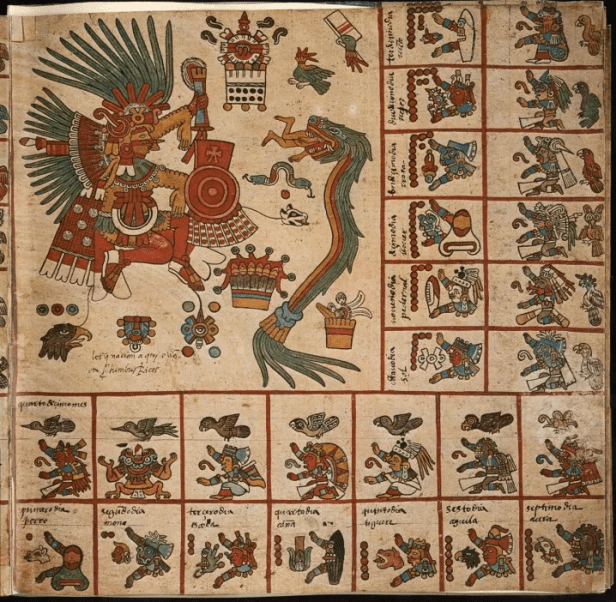
Amoxtli are documents that have a common system of representation for words, actions, and numbers. Entire libraries disappeared during the Spanish Conquest but many have survived to these days and have been codified. There is a uniform system that allows those familiar with the symbols to read and interpret the documents. I learned a few things that lead me to try to read the image of Our Lady of Guadalupe. That miraculous image is at the same time an icon that can be read as such but it can also be interpreted as an amoxtli. The signs are artfully intertwined in such a way that the image speaks to the Spanish reader and also to the native Mexicans of the 16th century. The image also contains images that talk to our contemporary scientists and also to ordinary people of today.
What I found a few years ago (I think it was around 2017) was something at the same time odd and revealing. It took a while for the concept to mature in my mind. I am sure more will come to me in the future.
This will require you to carefully examine the image of the Sacred Tilma of Guadalupe and use some skill to read the message that in my opinion is presented to us there.
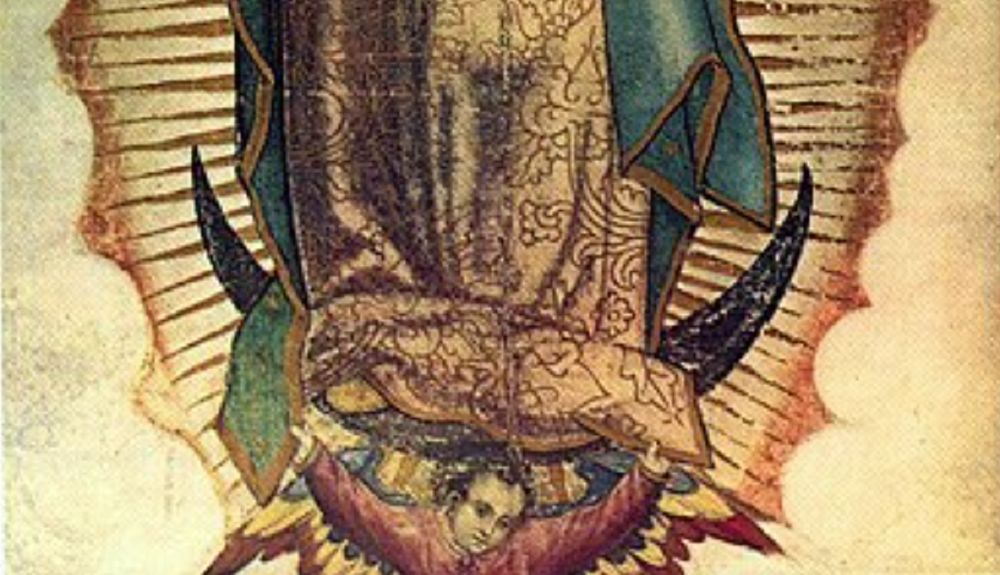
Let us notice first something that is not there: the serpent that we are accustomed to see under the foot of Our Lady. The Tilma of Guadalupe does not contain an obvious representation of Our Lady threading on the evil ophidian.
Many things are represented there in the lower half of the image but we will concentrate only on a few features that appear to me having some prophetic value.
The angel and a familiar face
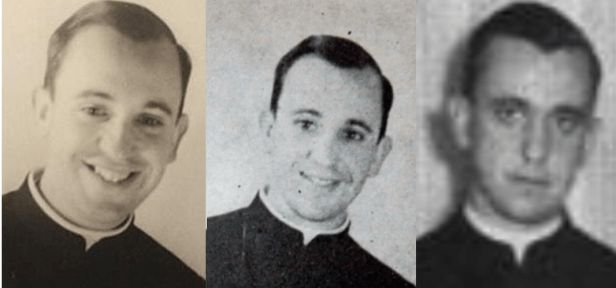
The angel of the Tilma is not your usual medieval angelical representation. It is an uncommon mix of young and old, the facial features are of a young European man but the hairline is receding. I do not remember anyone painting angels in such way but there it is. That face strongly reminds me of young Jorge Mario Bergoglio.
Notice the angel is dressed in red and his wings bear the colors of the French revolutionary flag. A friend commented on this:
“Nevertheless, the red white and blue wings are beyond interesting especially since the order is blue, white, red which is the order of the French flag rather than the American or British order.”
The angel’s hands are half hidden under the edge of Our Lady’s cloak. While Our Lady seems to be moving to her right, the angel appears to be trying to direct Our Lady to her left.
The sunrays depicted all around Our Lady are illuminating the hidden side of the Moon but not the side we see. The side we contemplate is dark.
Almost hidden among the folds of Our Lady’s dress, there is a shadow that clearly depicts Christ crucified. It is located in the exact center cress that divides the Tilma in two halves vertically in such a way that the left side appears to be the area that Our Lady is leaving behind while the right side seems to represent a future where Our Lady is going, leading us. The dividing line passes over the heart of the Crucified and seems to “drip” blood straight down on the head of the angel. (cf. Matthew 27: 25)
I will leave all those elements to your consideration to see if you reach the same conclusions I reached.
 Quod scripsi, scripsi