
“Hyperinflation and reckless monetary policy could soon devastate the global economy. We traveled to Argentina, where it’s already happened.” — Tucker Carlson
About five centuries ago a Pope decided to rebuild the ancient Basilica of St. Peter in Rome. The cross-shaped building erected by Emperor Constantine was replaced by a round Basilica. Things had started to change in those days. The process of building the new magnificent St. Peter’s began with the demolition of the old St. Peter’s. A parable was developing before the very eyes of the faithful as the German Reformation followed. “The wall on which the prophets wrote was cracking at the seams” as the Church, Europe, and a brave new world began to wake up from centuries of sleep.
It was 1536 when another Peter founded a town on a distant shore. Pedro de Mendoza, the “adelantado” sent by the Spanish crown created a new town on the shores of the Rio de la Plata. Don Pedro hailed from Granada, the last Moor city reconquered by King Ferdinand and Queen Isabella “the Catholic” only a few decades before in 1492. For a few centuries, the sleepy little town of Santa María de los Buenos Aires was an outpost of the Spanish Empire at the very edge of the civilized world.
It took until the late 1800’s for Buenos Aires to begin to grow into something more like a modern city. With the help of the likes of Simon Bolivar, the British managed to carve the old Spanish Empire into pieces they could digest. The turn came for the Argentine Republic about 1880. In about four decades a number of men (greedy, ambitious but also brave and hard working) lifted a country out of anarchy to the very top of the world. In those days, Argentina was emerging as one of the great economies of the West along with Britain, Germany, France, and the United States.
Some three centuries after its first foundation Buenos Aires was the undisputed queen of a vast region comprising most of the southern tip of the Americas. Affluent, powerful, and proud “the Port” grew and attracted many immigrants seeking to improve their fortunes. Unfortunately many adventurers and hotheads came mixed with those seeking work and opportunities.
In 1909 an Ukrainian anarchist immigrant named Simon Radowitzky bombed the coach of the Buenos Aires Chief of Police, Ramón L. Falcón, killing the Chief and another man in the vehicle. Not long after that in 1916 the Radical Party won the Presidential Elections and Hipólito Yrigoyen was elected. He began a long list of ineffective Presidents that lasts to this day. President Yrigoyen pardoned Radowitzky. The long night of Socialism fell on the fertile Pampas that now await the rise of a new day.
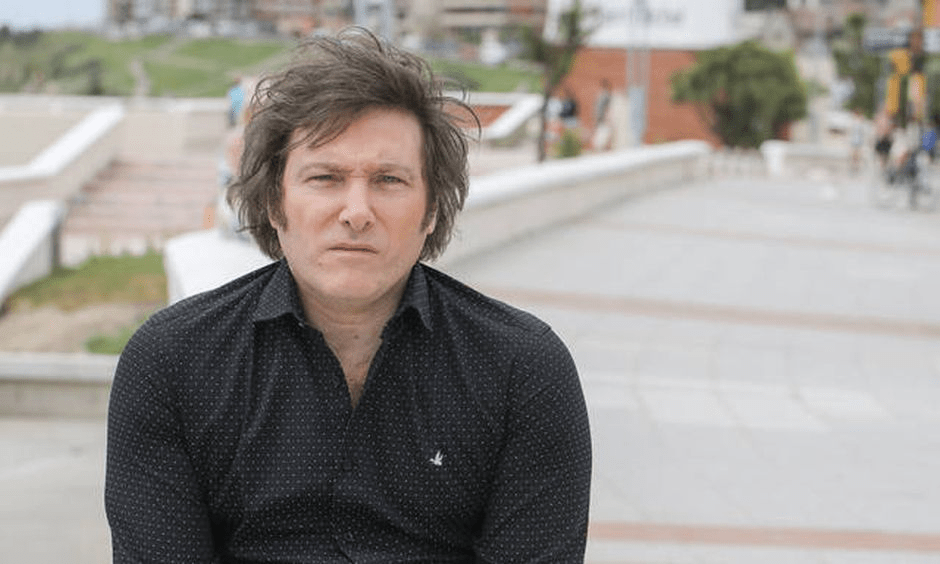
The old Spanish Empire that sent Pedro de Mendoza to the Americas suffered the same fate of the old St. Peter’s Basilica. The old Roman impulse faded and so Napoleon Bonaparte and other disgraces conspired to cause its fall. It was a long fall that took about two centuries from the loss of Peru to their defeat in the Spanish-American war. The Empire built by strong Catholics was lost by men lacking the strength to stem the tide of history. The Argentina of today is a country dominated by the master narratives set lose in the world by the powers that be. The weird antinatural concepts of the post-modern world are demolishing the country so rapidly that people have no time to react. A sense of powerlessness is crushing the heart of a nation that once had the courage to dream big and build even bigger. At this moment in history has appeared a man called Javier Milei. [For a fair review of the man read HERE]
Milei has adroitly enamored more than a third of the electorate with histrionics. As a politician without a party apparatus, it is hard to imagine how he could implement his ideas. One could hardly run a country merely on popularity. Argentina is in a midst of a serious economic crisis born of the havoc wreaked on the land by seven decades of Peronism. No amount of suffering seems to convince Argentines that World War II has ended, Peron has died, and his ideas brought disastrous results. But here comes Javier Milei to challenge all the nonsensical elements of this dying Ordo Peronistis in a way that engages the imagination of the new generations.
I believe Javier Milei is a construct made for this hour. I may be dead wrong and perhaps he is merely an odd guy trying to do some good. But the old dictum “if it’s too good to be true it probably isn’t” could apply here.
Is Milei the Gray Man chosen by God and predicted to lift Argentina to new heights of prosperity and order after a brief and cruel internal conflict? Some think so. After careful consideration one can see he cannot be that chosen man whom St. Luigi Orione described as a good Catholic reluctant to lead a country of reprobates. A man who finally accepts his mission with the help and counsel of an “excelsior Bishop”. Milei is none of that. In fact, judging by his own words, he appears to be about to convert to Judaism.
 Quod scripsi, scripsi